
How the Chess Pieces Move
Six pieces, six ways to move
Every chess piece has its own way of moving, and each one captures the same way it moves, except the pawn. On the boards below, the dots show every square the piece can reach, and a ring marks a piece it can capture.
The rules every piece follows
- A piece may never land on a square held by its own side.
- A piece captures by landing on an enemy piece, which comes off the board. Capturing is a choice, never a duty, unless it is the only legal move you have.
- Only the knight jumps. Every other piece needs a clear path, and stops at the first piece in its way, capturing it if it belongs to the enemy.
- No move may leave your own king in check (see check and checkmate).
The king
The king moves one square in any direction: forward, back, sideways or diagonally, and it captures the same way. It is not the strongest piece, but it is the one that matters: lose it to checkmate and you lose the game. So the king may never move onto a square an enemy piece attacks, which also means the two kings can never stand next to each other.
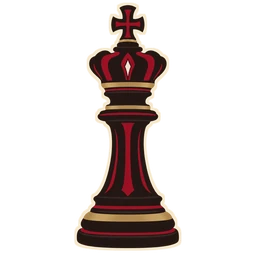
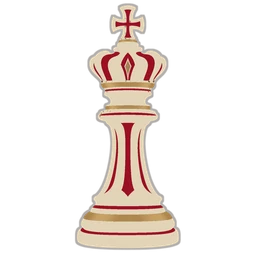
The king also has one special move, made together with a rook: castling.
The queen
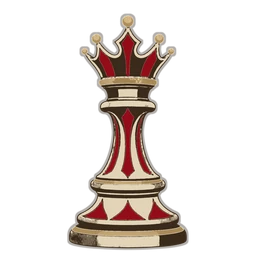
The queen moves any distance in a straight line, along a rank, a file or a diagonal, as long as nothing is in the way. She moves like a rook and a bishop together, which makes her the strongest piece on the board, worth about nine pawns.
The rook
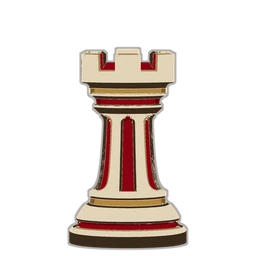
The rook moves any distance along a rank or a file: straight up, down, left or right. It cannot pass through a piece. It stops in front of one of its own, or captures an enemy piece and stops there. A rook is worth about five pawns.
The bishop
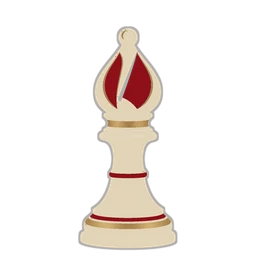
The bishop moves any distance along a diagonal. Because it only ever moves diagonally, a bishop that starts on a dark square stays on dark squares all game, and one that starts on a light square stays on light squares. Each side has one of each. A bishop is worth about three pawns.
The knight
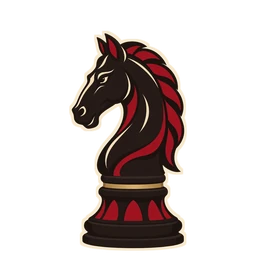
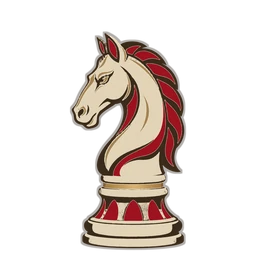
The knight moves in an L: two squares along a rank or a file, then one square to the side. It is the only piece that jumps. Whatever stands on the squares in between does not matter, only the square where it lands, and it captures by landing on an enemy piece. A knight is worth about three pawns, the same as a bishop.
A handy way to see it: a knight always lands on a square of the other colour from the one it started on.
The pawn
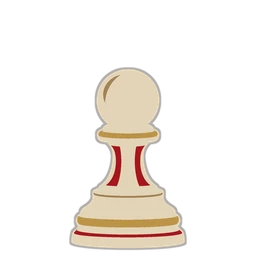
The pawn moves straight forward, one square at a time, and never backward. On its very first move it may go one square or two, as long as both squares are empty. It is the only piece that captures differently from the way it moves: it captures one square diagonally forward, and it cannot capture straight ahead, so a piece directly in front of it stops it completely.
6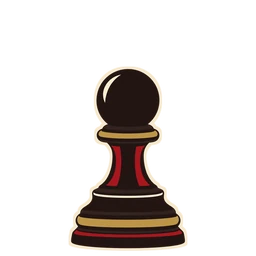
A pawn that reaches the far end of the board is promoted, and pawns have one more capture of their own, en passant.
What the pieces are worth
| Piece | Worth |
|---|---|
| Pawn | 1 |
| Knight | 3 |
| Bishop | 3 |
| Rook | 5 |
| Queen | 9 |
| King | Never traded: lose it and you lose the game |
These numbers are not a rule of chess. They are the rough guide every player uses to judge a trade: giving up a knight to win a rook gains two points, and giving up a queen for a rook loses four.
La Reina's School · Unit 1 · Free How the pieces move One piece at a time, on a quiet board, until every move feels natural. Learn it on the board with La Reina: open the game and tap La Reina's School.